
TM-1-1500-344-23-2
AIRCRAFT VOLUME II
TECHNICAL MANUAL; CLEANING AND CORROSION CONTROL
APRIL 2009








TM-1-1500-344-23-2 - Page 37 of 240
2-13
NAVAIR 01-1A-509-2
TM 1-1500-344-23-2
15 April 2009
2-9.2.2. (N) Pre-Wash Lubrication.
a. To protect against cleaning solution entrapment,
inspect all lubrication points that have exposure type
lubrication fittings.
b. Prior to lubricating any components or parts,
remove all foreign matter from joints, fittings, and bearing
surfaces, using non-woven cleaning cloth. Wipe up all
spilled or excess oil and grease.
c. Lubricate all fittings which will be exposed to
wash solutions, in accordance with maintenance
manuals or maintenance cards. If fittings do not accept
lubrication, replace and lube prior to wash.
d. See applicable maintenance manual and
paragraph 2-13 for lubrication of aircraft components.
2-9.2.3. Protection From Water/Cleaning Compound
Intrusion. Take the following steps to prevent water/
cleaning compound intrusion during cleaning:
a. Close doors and emergency openings.
b. Refer to aircraft maintenance manuals for
locations of drain holes. Check drain holes. Make sure
that all drain holes are clear by inserting a probe (such
as a pipe cleaner), except where pressurized flapper
valves are located.
c. Cover vents, openings, and ports. Refer to aircraft
maintenance manuals for locations of vents to be
masked. Pitot static ports shall be covered. If covers are
not available, barrier material (MIL-PRF-131 Class 1)
may be cut into circular pieces and taped in place with
preservation tape (AMS-T-22085 Type II). Covers must
be removed prior to release of aircraft for flight. Particular
care shall be taken to ensure that static vents are not
fouled by tape adhesive transfer. In the event of
significant adhesive transfer, clean with aliphatic naphtha
(TT-N-95) or degreasing solvent (MIL-PRF-680 Type II).
CAUTION
Do not use a direct spray of water or cleaning
compound on carbon brakes, wheels or wheel
hubs.
d. Cover wheels with locally fabricated covers to
prevent water/cleaning compound contamination of
wheel bearings and carbon brakes. Carbon brakes
have temporarily reduced performance when subjected
to water, deicers, degreasers, and oil. Brakes should be
protected from direct impingement as much as practical
during maintenance, aircraft cleaning or operations.
Weak or spongy brakes (and in some cases, smoke)
may result until the contaminants are burned off (normally
one flight). If contamination, corrosion, or loss of lubricant
in wheel bearings is suspected, remove wheel bearings
and relubricate in accordance with applicable
maintenance instructions. If contamination of carbon
brakes is suspected, decontaminate in accordance with
applicable maintenance instructions.
2-9.3. CLEANING METHODS.
WARNING
Wear rubber gloves, chemical or splash proof
goggles, and water resistant boots during
cleaning operations using cleaning compounds
MIL-PRF-85570 or MIL-PRF-85704. Wet
weather clothing is not required except during
cold weather. Open all circuit breakers
associated with battery power (refer to
applicable aircraft manuals) prior to application
of flammable solvents.
2-9.3.1. The methods for cleaning aircraft vary
depending upon the availability of fresh water. The
following methods should be used for cleaning aircraft
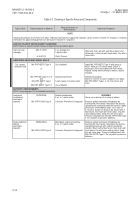
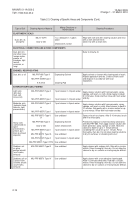
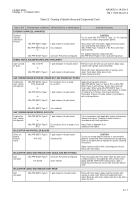
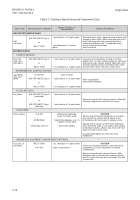
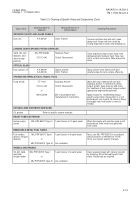
exterior surfaces. See Table 2-3 for instructions on
specific areas and components.

Back to Top


