
TM-1-1500-344-23-2
AIRCRAFT VOLUME II
TECHNICAL MANUAL; CLEANING AND CORROSION CONTROL
APRIL 2009








TM-1-1500-344-23-2 - Page 83 of 240
4-7
NAVAIR 01-1A-509-2
TM 1-1500-344-23-2
15 April 2009
b. Wash affected area thoroughly with soap and
water.
c. Flush affected area again with fresh water for at
least three minutes.
d. Get medical aid. Do not apply salves or other
medications without specific medical department direction.
4-6.3.3.2. If chemical remover is splashed in the eyes,
immediately do the following:
a. Flood the eyes with water for at least 15 minutes.
b. Get medical attention immediately.
4-6.4. CHEMICAL PAINT REMOVAL PROCEDURES.
The following procedures shall be followed when using
paint removers MIL-R-81294 and TT-R-2918:
WARNING
Whenever possible, paint removal shall be
accomplished in a corrosion control facility
designed for paint removal. If not available,
ensure adequate ventilation. Army and Navy
personnel shall read paragraphs 4-6.2 and
4-6.3 prior to using any chemical remover.
CAUTION
Paint removers shall not be used on plastics,
fiberglass or graphite composites, or other
organic matrix structural composite surfaces.
Keep paint removers away from fuel or watertight
seam sealants, since they will tend to soften
and destroy the integrity of sealants. Synthetic
rubber parts, aircraft tires, fabrics, and acrylic
plastics must be completely protected against
possible contact with paint removers.
a. Mask acrylic and plastic surfaces, rubber hoses
and tubing, exposed wiring, and any other surfaces that
can be damaged from contact with the paint remover.
Use barrier material (MIL-PRF-131 Class 1) and
aluminum foil tape (AMS-T-23397 Type II).
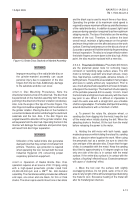
b. To chemically paint strip small surface areas,
mask around the area to be stripped using barrier
material and aluminum foil tape. Raise the tape about
1
⁄
2
inch along the bottom of the area as shown in
Figure 4-1.
c. Prior to application of paint remover, remove
excess sealant with a sharp plastic scraper. Then
remove the remaining residue using the paint remover.
d. Application.
(1)
MIL-R-81294: Apply a thick, continuous
coating of paint remover to cover the surface to be
stripped using a nylon bristle brush or equivalent.
(2)
TT-R-2918: Apply a thin coating of paint
remover using an acid or paintbrush. Keep material wet
by reapplying thin coats of additional TT-R-2918 paint
remover periodically.
NOTE
Parts which are only coated with an epoxy
primer are very difficult to strip and need to be
scrubbed with nylon brushes. Parts coated with
an epoxy primer and a topcoat are easier to
strip.
e. Allow paint remover to remain on the surface for
a sufficient length of time to wrinkle and completely lift
the paint, usually 10-40 minutes depending on the
temperature, humidity, and type of paint being removed.
Paint removal rates may vary with temperature and
humidity. The strip rate of the TT-R-2918 material is
slower than that of MIL-R-81294. Reapply paint remover
as necessary in the areas where paint remains tight or
where the material has dried. Micarta scrapers, abrasive
pads (A-A-58054) or fiber brushes (A-A-3118) may be
used to assist in removing persistent paint. Do not rinse
with water until all paint has been loosened. Water
greatly reduces the paint stripping efficiency of the
remover.
Figure 4-1. Masking Around Area to be Stripped

Back to Top


